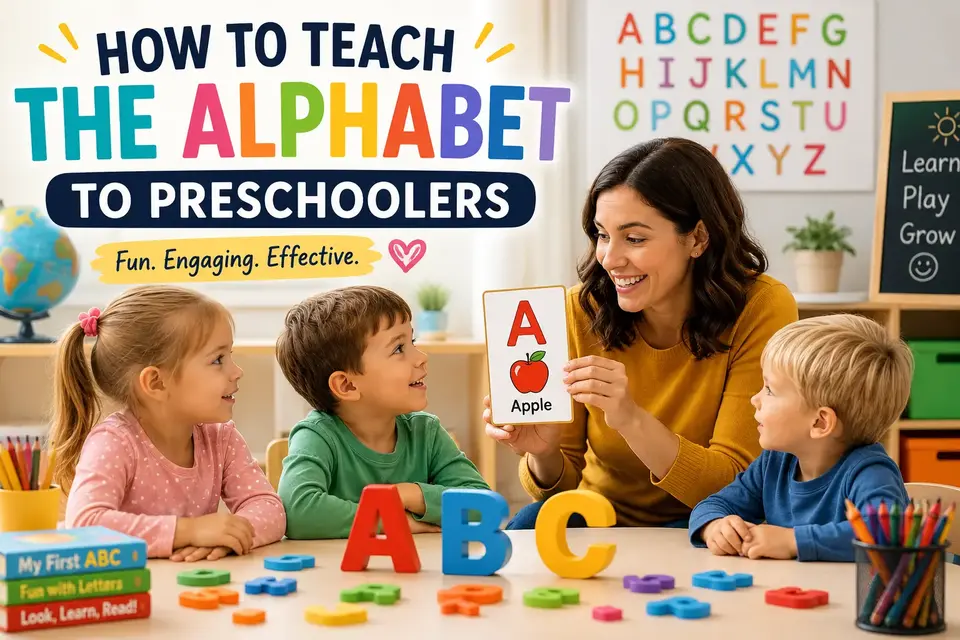
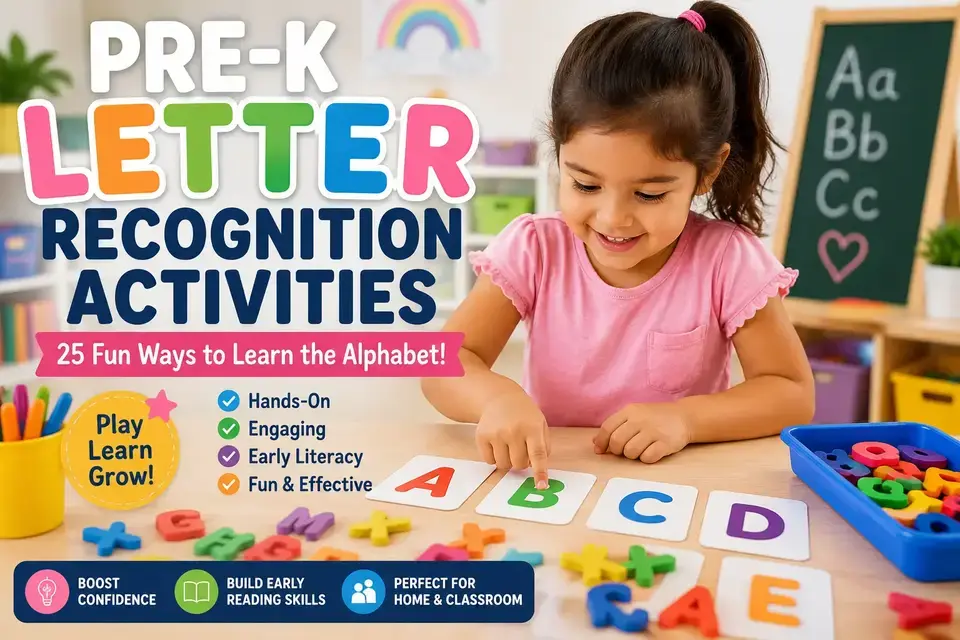
Learning to recognize letters is one of the first steps toward becoming a confident reader. Young children learn best through play, exploration, and repetition rather than worksheets alone. The right letter recognition activities keep children engaged while helping them develop the foundation they need for reading and writing.
Whether you’re a preschool teacher, homeschool parent, or caregiver, these fun and interactive ideas can make alphabet learning exciting every day.
Why Letter Recognition Matters
Letter recognition is the ability to identify both uppercase and lowercase letters by name and appearance. It supports:
- Early reading readiness
- Vocabulary development
- Phonemic awareness
- Writing skills
- Confidence with books and print
The more children interact with letters in meaningful ways, the faster they become familiar with them.
25 Fun Pre-K Letter Recognition Activities
1. Alphabet Scavenger Hunt
Hide magnetic or paper letters around the room and encourage children to find them. Ask them to name each letter as they discover it.
2. Letter Matching Cards
Create matching pairs using uppercase and lowercase letters. Children can match the correct pairs while practicing letter names.
3. Sensory Bin Letter Hunt
Fill a bin with rice, beans, or sand and hide plastic letters inside. Children dig to find letters and identify each one.
4. Playdough Letters
Roll playdough into long strands and shape each letter of the alphabet.
5. Rainbow Letter Writing
Children trace letters several times using different colored crayons or markers.
6. Alphabet Hop
Place letter cards on the floor and call out a letter. Children jump to the correct card.
7. Letter Fishing Game
Attach paper clips to letter cards and use a toy fishing rod with a magnet to catch letters.
8. Sticky Note Letter Wall
Write letters on sticky notes and place them on a wall. Call out a letter for children to find and remove.
9. Alphabet Puzzle Time
Use wooden alphabet puzzles to strengthen both letter recognition and fine motor skills.
10. Name Letter Hunt
Ask children to find the letters that appear in their own names.
11. Letter Bingo
Create simple bingo cards using letters instead of numbers.
12. Alphabet Sorting
Sort letters into uppercase and lowercase groups.
13. Salt Tray Writing
Children trace letters with their fingers in a tray filled with salt, sugar, or sand.
14. Build Letters with Blocks
Use building blocks, craft sticks, or LEGO® bricks to construct letters.
15. Alphabet Songs
Sing the alphabet song along with songs that focus on individual letters and sounds.
16. Dot Marker Alphabet
Children use dot markers to fill in large printed letters.
17. Letter Collage Craft
Choose one letter and decorate it with magazine cutouts, tissue paper, or stickers.
18. Alphabet Memory Game
Turn over letter cards and find matching pairs.
19. Outdoor Chalk Alphabet
Write letters with sidewalk chalk and encourage children to jump, run, or trace them.
20. Letter Toss
Throw a beanbag onto a letter mat and identify the letter it lands on.
21. Alphabet Books
Read alphabet-themed picture books together and point out featured letters.
22. Letter Stamp Art
Use alphabet stamps and ink pads to create colorful letter pages.
23. Find the Letter
Circle a target letter hidden among several different letters.
24. Alphabet Train
Arrange letter cards in alphabetical order to create a train.
25. Mystery Letter Bag
Place one letter inside a bag. Children feel its shape before revealing and naming it.
Activity Comparison Table
| Activity | Best For | Skills Developed |
|---|---|---|
| Sensory Bin | Hands-on learners | Letter identification, sensory exploration |
| Alphabet Hop | Active learners | Gross motor skills, letter recognition |
| Letter Bingo | Small groups | Listening and recognition |
| Playdough Letters | Fine motor practice | Letter formation |
| Name Letter Hunt | Beginners | Personal letter awareness |
| Alphabet Puzzle | Independent centers | Recognition and coordination |
Tips for Teaching Letter Recognition
- Introduce only a few letters at a time.
- Review previously learned letters regularly.
- Use both uppercase and lowercase letters.
- Connect letters with children’s names.
- Keep lessons playful and short.
- Praise effort rather than perfection.
- Read alphabet books every day.
- Use letters naturally during everyday routines.
Common Mistakes to Avoid
- Teaching too many letters at once.
- Relying only on worksheets.
- Skipping review sessions.
- Ignoring lowercase letters.
- Making learning feel like a test instead of a game.
A balanced mix of movement, crafts, songs, and hands-on activities keeps preschoolers motivated and helps them retain what they learn.
Frequently Asked Questions
At what age should children recognize letters?
Many children begin recognizing some letters between ages 3 and 4, while most develop stronger letter recognition during pre-K. Every child progresses at their own pace.
Should I teach uppercase or lowercase letters first?
Many educators introduce uppercase letters first because they are visually simpler, then gradually teach lowercase letters alongside them.
How long should letter activities last?
Ten to fifteen minutes is often enough for preschoolers. Short, engaging activities are generally more effective than longer lessons.
How often should we practice?
Daily practice through games, books, songs, and everyday conversations provides consistent exposure without overwhelming young learners.
Conclusion
Pre-K letter recognition doesn’t have to involve endless worksheets. When children learn through play, movement, music, crafts, and exploration, they build stronger alphabet knowledge while enjoying the process. By rotating various engaging activities, you can keep learning fresh and help young learners develop the confidence they need for future reading success.